Karate Stances (Dachi): Fundamental Postures by Master Shigeru Egami
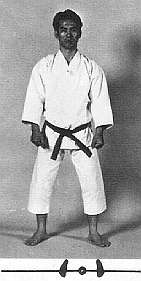
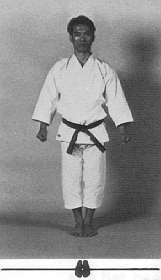
Hachiji-dachi (Natural Stance / Shizen-tai) as taught by Master Shigeru Egami.
The postures that have been handed down to us from the past in traditional Karate-do are: the natural stance (Hachiji-dachi), the reverse natural stance (Gyaku hachiji-dachi), the stance with feet together (Heisoku-dachi), the horse-riding stance (Kiba-dachi), the back stance (Kokutsu-dachi), the cat-foot stance (Nekoashi-dachi), the forward stance (Zenkutsu-dachi), and the stance called Sanchin-dachi. Two stances that have been adopted in more modern times are the square stance (Shiko-dachi) and the immovable stance (Fudo-dachi).
The Fundamental Postures
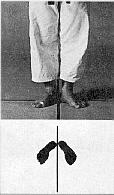
- Heisoku-dachi: Feet touching parallel.
- Musubi-dachi: Heels together, toes open at 45 degrees.
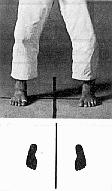
- Heiko-dachi: Feet parallel, shoulder-width apart.
- Gyaku hachiji-dachi: Inverted natural stance (toes pointing inward).
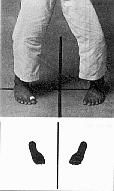
- Hachiji-dachi: Natural stance, toes open naturally.
The Natural Stance (Hachiji-dachi / Shizen-tai)
As its name implies, this is the most natural of all Karate stances. It is also called Shizen-tai, literally meaning the "natural body posture". It serves as the foundational root of all other stances, which may be understood as functional variations branching from it.
When standing in this posture, one should be in complete harmony with nature and with the universe. In former times it was customary to assume a rigid posture, with all muscles contracted and tense, but this was the exact opposite of true naturalness. Place the ankles so that they are separated by approximately shoulder width, with the toes pointing slightly outward.
All unnecessary muscular tension must be eliminated from the hands, legs, knees, hips, abdomen, and shoulders. Stand in a natural stance, relaxed, quiet, and receptive, as if your entire body were fused with the atmosphere. Although the stance appears simple to the beginner, achieving genuine relaxation and centered balance is profound and demanding.
Stance with Feet Together (Heisoku-dachi)
From the natural stance, slowly bring the feet together until the inner edges touch along their entire length. As you do this, contemplate the inner meaning of the posture. Compare it with the other stances; observe how your center of gravity responds and how your body state changes.
In classical practice, the knees are kept straight without locking, and the breath sinks naturally into the lower abdomen (Tanden).