Master Tetsuji Murakami: Pioneer of Shotokai in Europe
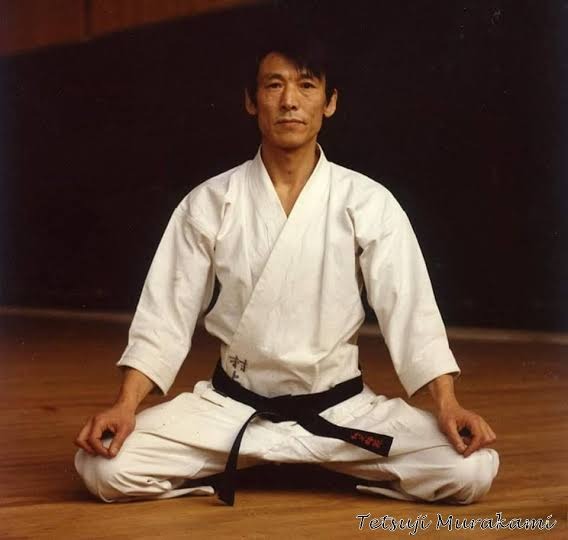
Master Tetsuji Murakami (1927 - 1987), pioneer of European Shotokai.
Master Tetsuji Murakami (1927 - 1987)
Technical Director of Shotokai Europe • The Master of Relentless Transformation
Archival & Bibliographical Foundation:
This biography incorporates primary documentation and firsthand testimonies from Marco Forti's historical study Shōtōkai No Rekishi: Excursus sulla storia del Karate-dō del M° Shigeru Egami (FIKTA Corso Maestri, 2003, pp. 14, 19, 21, 23-28, 41, 47, 50), together with European Shotokai archives.
Master Tetsuji Murakami (村上 哲次, 1927 - 1987) • Pioneer of traditional Karate-do in Europe and Technical Director of Nihon Karate-do Shotokai Europe.
Early Years in Shizuoka and Classical Foundations (1927 - 1957)
Tetsuji Murakami was born in Shizuoka Prefecture, Japan, in 1927. At the age of nineteen, in the austere aftermath of World War II, he commenced his training in Karate-do under Master Masaji Yamako (often erroneously transliterated as Yamaguchi in early Western publications). Master Yamako was an early, direct student of Ōsensei (大先生) Gichin Funakoshi and an uncompromising technician.
For ten continuous years, young Murakami trained relentlessly under Yamako's exacting guidance. During this decade, he simultaneously pursued classical Japanese martial traditions, studying Kendo, Aikido, and Iaido. This broad foundation gave Murakami an acute appreciation for sword distance (ma-ai), cutting trajectories, and the uncompromising spirit of samurai Budo.
Arrival in Europe: Hardship, Independence, and Elvis Presley (1957 - 1967)
In 1957, at thirty years of age, Murakami was invited to France by Henri Plée to teach at the Académie Française des Arts Martiaux (AFAM) in Paris. Arriving with virtually no knowledge of French, Murakami signed a restrictive contract that left him in severe financial hardship, earning barely enough to secure basic sustenance in a foreign land.
Despite these harsh circumstances, Murakami's technical brilliance and fierce martial presence captivated French practitioners. By 1959, he freed himself from the academy, opening his own independent dojo and introducing Karate, Aikido, and Kendo across Paris. Over the following decade, his instructional influence expanded throughout Western Europe, establishing branches in Germany, England, Italy, Yugoslavia, and Switzerland.
Teaching Elvis Presley in Germany (1958 - 1959)
During his regular teaching trips to Germany in the late 1950s, Master Murakami instructed American military personnel stationed overseas. Among his students was Elvis Presley, then completing his military service in Germany.
As documented by Marco Forti in Shōtōkai No Rekishi (p. 21), Master Murakami later recalled his surprise at the American music icon's attitude in the dojo. Presley arrived without entourage or arrogance, bowed respectfully, wore a beginner's white belt, and endured the grueling conditioning alongside all other students. Murakami noted that Presley proved to be an exceptionally polite, disciplined, and hardworking student who asked for no special privileges on the tatami.
The 1968 Tokyo Revelation: Starting from Zero Under Shigeru Egami
By 1968, Tetsuji Murakami had attained 5th Dan and was celebrated across Europe as a formidable master of orthodox, powerful, hard-style Shotokan. Yet a deep spiritual unease gnawed at him. He felt that the rigid muscular tension and explosive contractions of modern karate had reached an evolutionary dead end.
In the autumn of 1968, accompanied by Tsutomu Ohshima, Murakami traveled to Japan. During this pilgrimage, he visited the Shotokan and met Master Shigeru Egami.
The encounter shook Murakami to his very core. When Master Egami demonstrated his relaxed, penetrating punch and fluid body deflections, Murakami stood before him in disbelief. When Egami struck him, Murakami felt zero surface impact, yet a terrifying kinetic wave penetrated straight through into his internal organs and spine.
Displaying extraordinary martial integrity, Murakami renounced his pride, his international fame, and his 5th Dan rank. He recognized that the rigid karate he had taught for two decades was an illusion. Right then and there, he committed himself to Master Egami as a humble disciple, determined to rebuild his art from absolute scratch.
Returning to Europe, Murakami gathered his senior European students and delivered an astonishing ultimatum: he was discarding the hard, tense style they had practiced for years and starting over in Nihon Karate-do Shotokai. Those who wished to pursue true depth were invited to accompany him; those who wanted sports trophies were free to depart. Most of his devoted disciples stayed, embarking on an arduous technical rebirth.
The Legendary Sérignan Beach Camps (1969 - 1986)
To eradicate stubborn muscular habits and unlock the natural elasticity demanded by Egami's karate, Master Murakami established the legendary summer training camp in Sérignan-Plage, on the Mediterranean coast of southern France, in 1969.
The Sérignan camps became mythical in European martial history:
- Exhaustion on the Dunes: Students practiced continuous oi-zuki (stepping punches) and low stances (zenkutsu-dachi, kiba-dachi) across deep, loose sand dunes under the scorching summer sun.
- Immersion in the Sea: Practicing kata chest-deep in breaking Mediterranean waves forced students to abandon muscular stiffness; fighting against water resistance taught them that only relaxed, hydrodynamic body mechanics could move freely.
- Mental Breakthrough: Through sheer physical exhaustion, practitioners burned away the ego and superficial tension, awakening the body's intrinsic skeletal connection (shizentai).
The 1976 European Tour and the Technical Directorate
In 1976, Master Murakami had the supreme honor of hosting Master Shigeru Egami, his wife Chiyoko Egami, and young Tomoji Miyamoto during their month-long tour of Europe. The Japanese delegation visited Paris, Sérignan, Madrid, Lisbon, and Geneva, conducting seminars and unifying European practitioners.
During this historic visit, Master Egami officially designated Master Tetsuji Murakami as the Technical Director for Shotokai Europe. Egami praised Murakami's fearless honesty in transforming himself, confirming that Murakami's European students were executing the authentic, soft, penetrating karate envisioned by the founder.
"The Master of My Maturity": The Final Years (1981 - 1987)
In January 1981, Master Murakami was conducting an international seminar in Lisbon, Portugal. Midway through the camp, a telegram arrived bearing tragic news: Master Shigeru Egami had passed away in Tokyo on January 8.
Without a second thought, Murakami immediately halted the seminar. With tears in his eyes, he addressed the assembly, explaining that his own teacher had departed this world. He boarded the first flight to Tokyo to attend Master Egami's funeral at the Gokokuji Temple. In his personal writings, Murakami reverently referred to Egami as:
"The master of my maturity, who taught me to see beyond technique into the truth of the human spirit."
(Cited in Forti, Shōtōkai No Rekishi, p. 28)
In 1985, his close disciple and physician Dr. Fernando Sarmento in Portugal diagnosed Master Murakami with advanced cancer. Despite declining health, Murakami refused to abandon his students, continuing to teach with radiant intensity and infectious passion.
Master Tetsuji Murakami passed away in Paris on January 24, 1987, at the age of 59. His indomitable courage, technical humility, and uncompromising quest for martial truth remain one of the brightest chapters in the history of Karate-do Shotokai.
Key Historical Milestones
- 1927: Born in Shizuoka Prefecture, Japan.
- 1946 - 1956: Ten years of rigorous training under Master Masaji Yamako; studies Kendo, Aikido, and Iaido.
- 1957: Arrives in Paris, France, pioneering Japanese martial arts in Western Europe.
- 1958 - 1959: Teaches in Germany, instructing Elvis Presley as a humble beginner student.
- 1968: Travels to Tokyo, meets Master Shigeru Egami, renounces 5th Dan, and embraces Shotokai.
- 1969: Founds the iconic Sérignan-Plage summer camp in southern France.
- 1976: Hosts Master Shigeru Egami, Chiyoko Egami, and Tomoji Miyamoto in Europe; appointed Technical Director of Shotokai Europe.
- 1981: Halts Lisbon seminar upon hearing of Egami's passing to fly to Tokyo for the funeral.
- 1987: Passes away in Paris on January 24 at age 59.
Bibliography & Archival Sources
- Marco Forti, Shōtōkai No Rekishi: Excursus sulla storia del Karate-dō del M° Shigeru Egami, FIKTA Corso Maestri, 2003, pp. 14, 19, 21, 23-28, 41, 47, 50.
- Association Murakami-Kai, Tetsuji Murakami: Archives et Enseignements, Paris, France.
- Shigeru Egami, The Way of Karate: Beyond Technique, Kodansha International, Tokyo, 1976.
- Chiyoko Egami, Kimikagesō (君影草), Tokyo, 1991.