The Traditional Spatial Layout of a Martial Arts Dojo
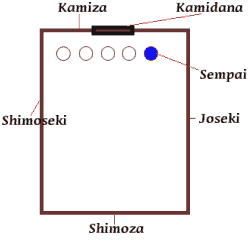
Traditional spatial arrangement and directional orientation of a classical Japanese Budo Dojo.
In traditional Japanese martial arts (Budo), the Dojo (道場) is far more than an athletic gymnasium. The term literally translates to the "Place of the Way", tracing its historical origins to Buddhist monastic practice where seekers pursued spiritual awakening. In traditional Karate-do, the dojo is a sanctuary of mutual respect, austere discipline, and self-cultivation.
The physical architecture and spatial orientation of a classical dojo follow precise hierarchical and cosmological principles designed to harmonize human interaction, ensure safety, and maintain martial etiquette (Reigi).
The Four Sacred Walls and Directions
A traditional dojo is organized around four distinct directional boundaries, each carrying a profound functional and philosophical purpose:
1. Kamiza (上座 - The Upper Seat)
The Kamiza (also historically referred to as Shinza, the sacred seat) is the focal point and head of the dojo. Traditionally oriented toward the north or east, it houses the Tokonoma (ceremonial alcove), the dojo calligraphy or scroll (Kakemono), and portraits of foundational masters-in Shotokai, O-Sensei Gichin Funakoshi and Master Shigeru Egami.
During formal ceremonies, the Chief Instructor (Sensei) and presiding elders sit or stand before the Kamiza facing the students.
2. Shimoza (下座 - The Lower Seat)
Located directly opposite the Kamiza, typically adjacent to the entrance, the Shimoza is the boundary where students assemble. When class commences and concludes, students kneel in formal seated meditation (Seiza) along this wall, lined up strictly from highest rank to lowest rank from right to left, facing the Kamiza.
3. Joseki (上席 - The Upper Side)
The Joseki is the wall situated to the right of the students when facing the Kamiza (traditionally the east side). This side is reserved for senior black belts (Yudansha), senior assistants (Sempai), and distinguished visiting instructors. In traditional Japanese spatial hierarchy, the right side represents seniority and spiritual guidance.
4. Shimoseki (下席 - The Lower Side)
The Shimoseki is the wall to the left of the students when facing the Kamiza (traditionally the west side). This area is occupied by junior practitioners (Kohai) and non-black-belt students (Mudansha).
Ceremonial Protocol and Etiquette
Upon entering or departing the dojo floor, every practitioner executes a respectful standing bow (Ritsu-rei) toward the Kamiza. This gesture purifies the mind of worldly distractions and marks the conscious transition into a space governed by sincerity, focus, and non-violence.