Hanshi Shihan Tomeji Ito: A Legacy of Dedication to Karate and Budo in Brazil
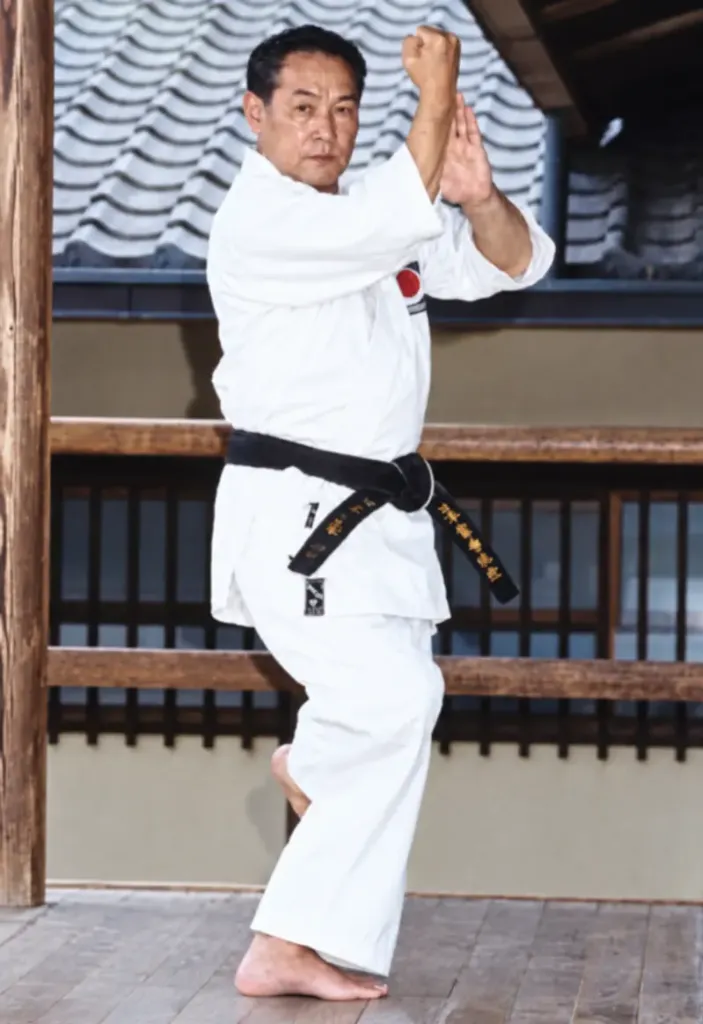
Hanshi Shihan Tomeji Ito (1927 - 2011), 7th Dan SKIF and pioneer of Karate-Do and Budo in Brazil • Demonstrating Gankaku in traditional Tsuruashi-dachi.
Hanshi Shihan Tomeji Ito: Pioneer of Traditional Budo and Karate in Brazil
Primary biographical documentation compiled from the historical archives of the Federação Paulista de Karatê, the Associação Ito, and the oral testimonies preserved by his direct disciples in Brazil and South America.
Introduction: A Life Dedicated to Budo
Hanshi Shihan Tomeji Ito (1927 - 2011) was a master whose lifelong path embodied not only consummate technical proficiency, but also an unswerving commitment to the core tenets of Budo (the martial way), the philosophical depth of Karate-Do, and the education of upright, compassionate citizens. Born in Japan and rooted in Brazil since early childhood, Professor Ito stood as a central pillar in the development of authentic martial arts in South America, intertwining athletic rigor with spiritual and ethical cultivation.
His enduring legacy reverberates today across Brazil, Japan, and internationally through the generations of instructors he formed, as well as through his decisive contributions to founding national and continental governing bodies.
1. Childhood, Immigration, and Early Martial Roots (1927 - 1933)
Birth in Sendai (1927): Tomeji Ito was born on January 21, 1927, in Tamatsukuri-gun, Sendai, Miyagi Prefecture, Japan. From early boyhood in northern Japan, he was introduced to the classical art of Judo, an austere discipline that formed the bedrock of his physical coordination and warrior mindset throughout his entire life.
Immigration to Brazil (1933): In 1933, at the age of six, Ito immigrated with his family to Brazil aboard one of the early immigrant vessels, settling first in the agricultural interior of the state of São Paulo at Barretos. The family soon relocated to Bebedouro, an active hub of the Japanese immigrant community. Within this cultural enclave, young Ito resumed regular Judo practice under Japanese immigrant instructors, demonstrating an innate talent for grappling, balance, and centered leverage. Over the following decades, he attained the rank of 3rd Dan in Judo.
2. Elite Athletics: Olympic Gymnastics and Bodybuilding (1940 - 1949)
Moving to the metropolis of São Paulo in 1940, Ito expanded his physical training into elite athletic disciplines that would give his later karate practice exceptional kinetic elasticity and power.
- Olympic Gymnastics at Clube de Regatas Tietê: Ito competed as a gymnast for the renowned Clube de Regatas Tietê, specializing in the two most demanding apparatuses: the still rings and the horizontal bar. Under the tutelage of Prof. Antônio Passos Teixeira and subsequently Olympic champion Prof. Jacob Gendes, Ito earned national championships and was crowned Brazilian Vice-Champion in 1949.
- Bodybuilding and Judging: In parallel with gymnastics and Judo, Ito explored bodybuilding to cultivate muscular balance and resilience, winning state titles in São Paulo and eventually serving on official judging panels for bodybuilding federations.
This diverse foundation of aerial spatial awareness, grip strength from Judo, and gymnastic core conditioning gave Sensei Ito an extraordinary kinetic foundation that astonished fellow martial artists when he began traditional karate.
3. Initiation into Karate and International Training (1949 - 1967)
Karate Debut with Master Ozawa (1949): At the age of twenty-two in 1949, Ito began learning Karate under Master Ozawa. These early sessions were conducted in an intimate, private format with only four students gathered at Master Ozawa's residence in São Paulo, focusing on deep stances, makiwara striking, and the core katas of traditional Shotokan.
Deepening the Path with Harada and Pinatti (1956): In 1956, Ito began training under Prof. Harada and Prof. Pinatti, broadening his understanding of dynamic hip rotation, timing, and traditional sparring strategy.
American Journey and Hidetaka Nishiyama's Dojo (1967): In 1967, Ito traveled to the United States on an extended journey dedicated to Buddhist studies. While abroad, he immersed himself in intensive karate training at the renowned Los Angeles dojo of Master Hidetaka Nishiyama, one of Master Gichin Funakoshi's foremost senior students and co-founder of the Japan Karate Association (JKA). At Nishiyama Sensei's dojo, Ito became a respected, vigorous sparring partner, testing his physical and mental conditioning against elite American and Japanese practitioners. He also pursued further studies and training in Hawaii before returning to Brazil.
4. Founding the Associação Ito de Judô and National Expansion (1970s - 1980s)
Associação Ito de Judô (1970): Upon returning to São Paulo, Professor Ito founded the Associação Ito de Judô in 1970. The dojo quickly grew into an epicenter of traditional martial arts in the city, where Karate was taught regularly alongside Judo, particularly during intensive Saturday sessions led in collaboration with Prof. Harada.
Institutional Architect of Brazilian Karate: Throughout the 1970s and 1980s, Ito dedicated himself tirelessly to establishing formal governance for traditional karate in Brazil. Working closely with General Henrique Palmeiro D'Ávila and fellow senior pioneers, Ito was one of the key driving forces behind the establishment of:
- The Federação Paulista de Karatê (FPK)
- The Confederação Brasileira de Karatê (CBK)
Within the Federação Paulista de Karatê, Ito occupied essential leadership positions across decades:
- Vice-President
- Technical Director
- Referee Director
- Dan Examination Board Member
- Kodansha Council Member (the assembly of senior masters and elders)
Throughout these years, Sensei Ito coordinated technical seminars with visiting global Shotokan masters, including Tetsuhiko Asai, Hirokazu Kanazawa, Masahiko Tanaka, and Sadamu Sasaki, ensuring Brazilian students had direct access to high-level technical analysis.
5. International Consummation: The 7th Dan Examination in Japan (1999)
The Historic 7th Dan at Age 73: In 1999, Master Tomeji Ito traveled to Japan to sit for the rigorous examination for the rank of 7th Dan (Nanadan) under the SKIF (Shotokan Karate-do International Federation). At seventy-three years of age, Ito was the oldest candidate taking the examination. His impeccable performance, stamina, and profound technical execution earned him the unanimous commendation of the examination committee and the rank of 7th Dan, consolidating his position among the most revered masters of the Shotokan diaspora.
Mentoring World Champions in the ISKF: Master Ito served as mentor and coach at three World Championships organized by the ISKF (International Shotokan Karate Federation) in Mexico, Japan, and Italy. Under his guidance, his student Tetsuo Mizuno achieved international honors, including the title of World Kata Master Champion in Japan.
6. Mentorship of Humberto Heyden and Connection to Shotokai
A crucial chapter in Master Tomeji Ito's international legacy was his direct role in mentoring and certifying Master Humberto Heyden, the founder of Shotokai Karate Budo de Chile.
Recognizing Heyden's exceptional discipline and devotion to the non-commercial principles of Master Gichin Funakoshi, Master Ito served as his direct testing examiner in São Paulo:
- 2nd Dan (1971): Conferred upon Humberto Heyden in São Paulo, Brazil.
- 3rd Dan (1974): Conferred upon Humberto Heyden in São Paulo following rigorous evaluation.
- 4th Dan (1981) & 5th Dan (1989): Jointly awarded to Humberto Heyden by Master Tomeji Ito (Brazil) and Master Kenjiro Kawanabe (Japan).
Through this direct transmission, Master Ito formed an essential historical bridge linking traditional Shotokan in Brazil with the emerging Shotokai movement in Chile, maintaining fidelity to Master Funakoshi's maximum rank ceiling of 5th Dan.
7. Philosophy: Buddhism, Shinto, and Character Building
Master Tomeji Ito's worldview was deeply rooted in the philosophical and contemplative traditions of Buddhism and Shinto, which he practiced with lifelong devotion. The cardinal values of peace, compassion, clarity of mind, and respect for nature informed every facet of his pedagogical approach.
"Karate is not an instrument for winning medals or boasting violent dominance; it is a sacred forge for building noble human character."
For Sensei Ito, martial training was meaningless if it failed to elevate the moral consciousness of the practitioner. He taught that sweat on the dojo floor must translate into modesty, patience, and altruistic service within society, shaping practitioners into upright citizens who uplift their families and communities.
8. Passing and Eternal Legacy
On July 20, 2011, Hanshi Shihan Tomeji Ito passed away in São Paulo, Brazil, at the age of eighty-four. His passing was mourned by martial artists across Brazil, South America, and Japan.
Hanshi Shihan Tomeji Ito was a multifaceted master who integrated Judo, gymnastics, bodybuilding, traditional Shotokan karate, and Buddhist contemplation into a coherent, exemplary path of self-perfection. His legacy endures through the institutions he helped build, the thousands of students who trained under his guidance, and the living tradition of traditional Budo practiced today throughout the Americas.